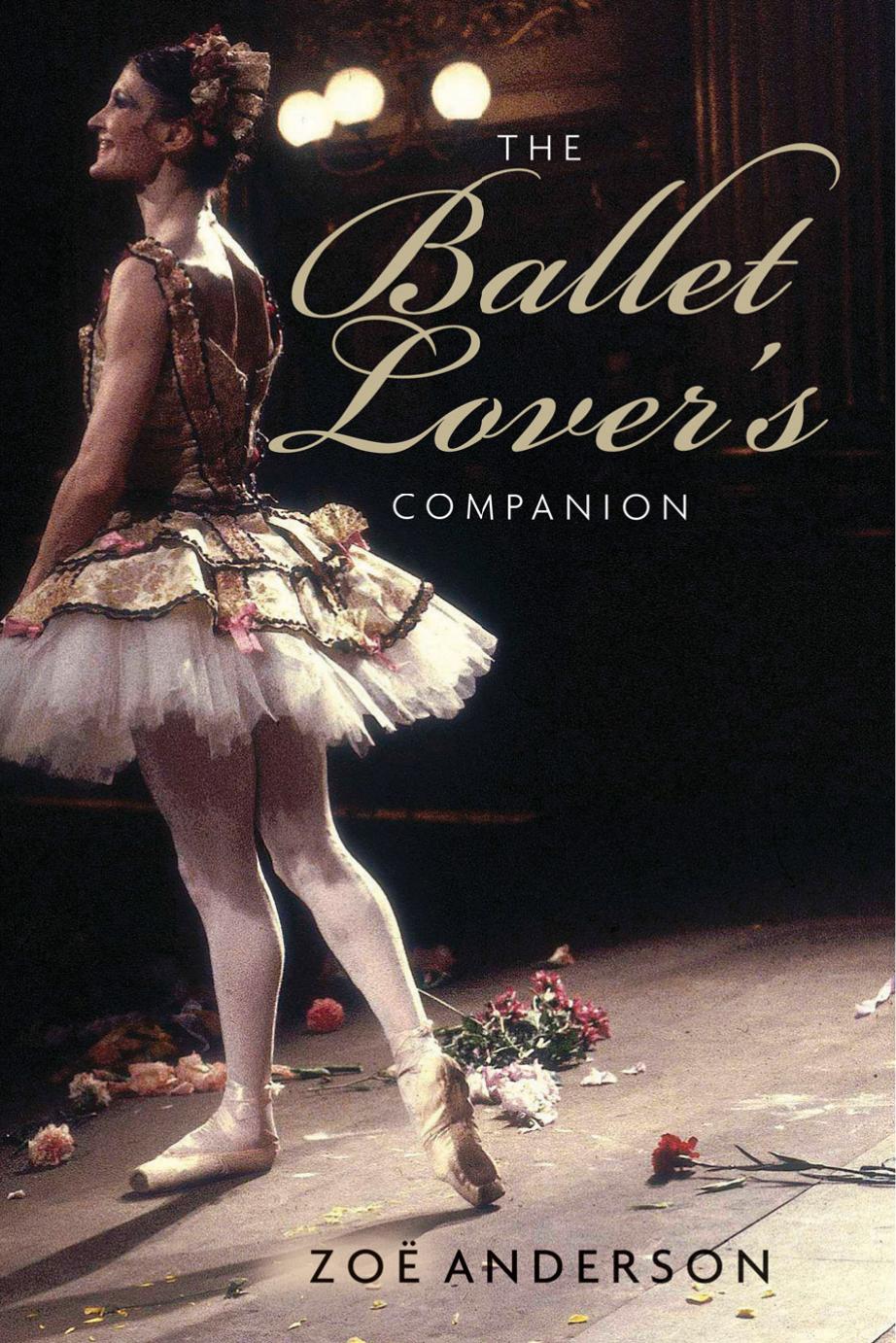
The Ballet Lover's Companion by Zoe Anderson
Author:Zoe Anderson
Language: eng
Format: epub, pdf
ISBN: 9780300154283
Publisher: Yale University Press
The Flames of Paris
Choreography: Vasily Vainonen
Libretto: Nikolai Volkov, Vladimir Dmitriev
Advising director: Sergei Radlov
Music: Boris Asafiev
Designs: Vladimir Dmitriev
Premiere: 7 November 1932, Kirov Theatre, Leningrad. Restaged 7 June 1933, Bolshoi Theatre, Moscow
Original cast: Jeanne Feya Balabina; Jerome Alexei Yermolayev; Thérèse Nina Anisimova
In The Flames of Paris, Soviet ballet celebrated the Russian Revolution by looking back to the French Revolution. The ballet was originally created in four acts: an uprising in Marseilles; a ball at the palace of Versailles, where the actress Mireille rejects the corrupt court to join the revolution; the storming of the Tuileries; and a final act of celebrations. The storming of the Tuileries, a spectacular scene, was performed on 6 November 1932 to mark the fifteenth anniversary of Russia’s own revolution of 1917. The next night, the complete ballet had its first performance in Leningrad, while Moscow dancers performed the third act. The Flames of Paris joined the Bolshoi repertory in 1933, with a cast that included Vakhtang Chabukiani as Jerome.
Vasily Vainonen had worked with Balanchine’s ‘Young Ballet’ group, where he created his spectacular, acrobatic ‘Moskovski Waltz’. In The Flames of Paris he created several leading roles, but the ballet’s main hero was the revolutionary crowd itself. Boris Asafiev’s score drew on French songs of the period, particularly the Marseillaise, and ‘Ça ira’ which was sung during the storming of the Tuileries: the huge cast closed ranks and slowly advanced on the footlights, muskets in hand, to the song’s menacing drumbeat. In the twenty-first century, Alexei Ratmansky called this ‘a mise-en-scène of genius … You know, the accent is on count two, it’s very syncopated, which is very common for Vainonen’s style. That makes it very, very exciting.’17
In celebrating the revolutionaries, Vainonen used folk dances from the period, both for the corps de ballet and for individual soloists. The large-scale carmagnole and the fierce Basque dances were particularly admired. The character dancer Nina Anisimova, who danced Thérèse, worked closely with Vainonen on her role; colleagues from the first production observed that she created many of her own steps. She went on to become one of Soviet ballet’s first female choreographers, creating the evening-length ballet Gayaneh, famous for its pas de deux and its sabre dance, to music by Aram Khachaturian.
Descriptions of the first production vary, particularly in the details of the first act. This synopsis focuses on the action common to all accounts.
Download
This site does not store any files on its server. We only index and link to content provided by other sites. Please contact the content providers to delete copyright contents if any and email us, we'll remove relevant links or contents immediately.
The Goal (Off-Campus #4) by Elle Kennedy(13649)
Kathy Andrews Collection by Kathy Andrews(11807)
Diary of a Player by Brad Paisley(7551)
What Does This Button Do? by Bruce Dickinson(6194)
Assassin’s Fate by Robin Hobb(6194)
Big Little Lies by Liane Moriarty(5782)
Altered Sensations by David Pantalony(5091)
Pale Blue Dot by Carl Sagan(4994)
Sticky Fingers by Joe Hagan(4185)
The Death of the Heart by Elizabeth Bowen(3601)
The Heroin Diaries by Nikki Sixx(3538)
Beneath These Shadows by Meghan March(3298)
Confessions of a Video Vixen by Karrine Steffans(3295)
How Music Works by David Byrne(3256)
The Help by Kathryn Stockett(3139)
Jam by Jam (epub)(3071)
Harry Potter 4 - Harry Potter and The Goblet of Fire by J.K.Rowling(3055)
Computational Linguistics and Intelligent Text Processing: 20th International Conference, CICLing 2019 La Rochelle, France, April 7â13, 2019 Revised Selected Papers, Part I by Alexander Gelbukh(2978)
Strange Fascination: David Bowie: The Definitive Story by David Buckley(2855)
